Beginner's Guide to Research Peptides: What You Need to Know
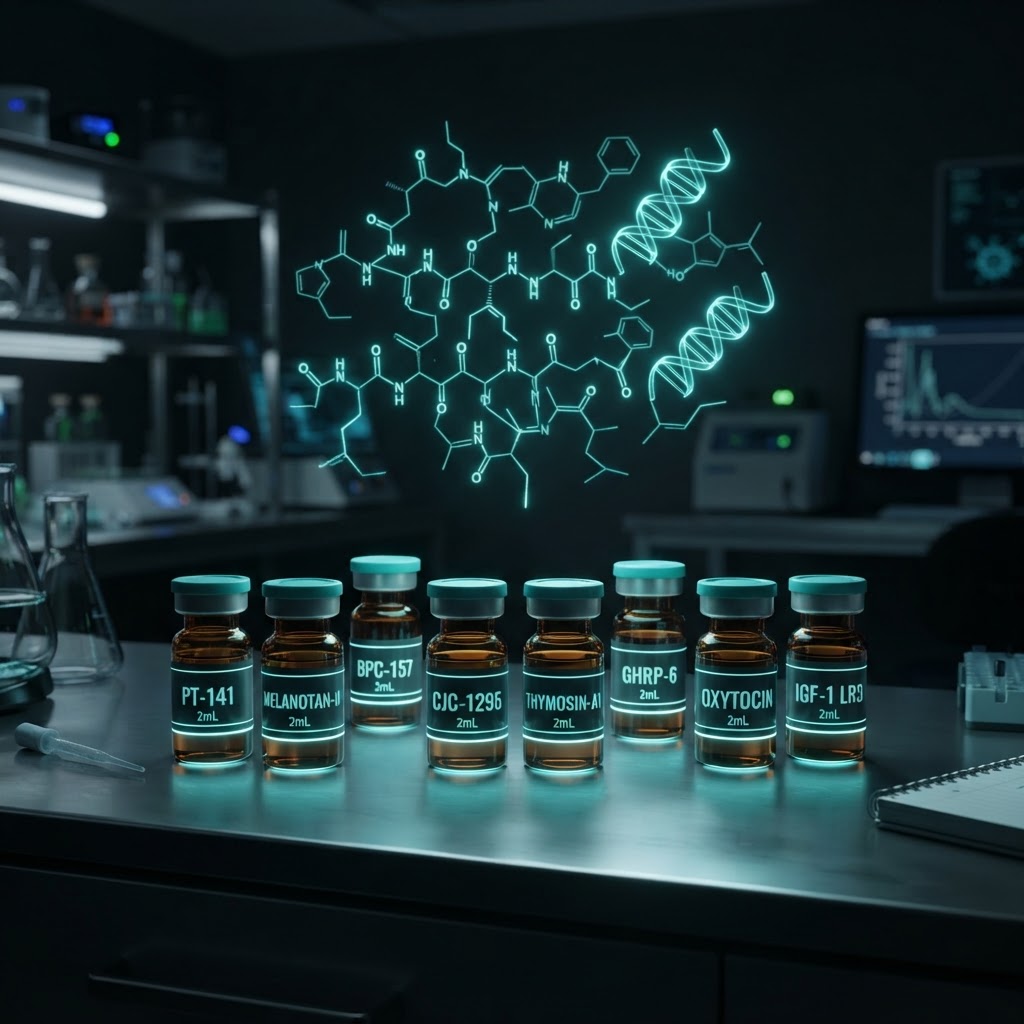
Table of Contents
What Are Research Peptides — And Why Does Every Serious Scientist Need to Understand Them?
Did you know that over 60 FDA-approved peptide-based drugs are currently on the market, with hundreds more in clinical development? Yet despite this explosive growth, many researchers entering the field still struggle with a fundamental question: where do you actually begin? Whether you're setting up a new laboratory program or expanding an existing one, this research peptides beginner's guide is designed to give you a rigorous, science-first foundation for understanding one of the most dynamic areas in modern biochemistry.
Peptides have moved from niche curiosity to central pillar of biomedical research in just a few decades. From metabolic regulation to neuroprotection, from wound healing to receptor binding studies, the versatility of synthetic peptides as research tools is virtually unmatched. This guide will walk you through the core concepts, mechanisms, current research landscape, and practical protocols — everything you need to begin working with research peptides confidently and responsibly.
What Are Research Peptides?
At their most fundamental level, peptides are short chains of amino acids linked together by peptide bonds — the same building blocks that make up proteins. The key distinction is size: while proteins typically consist of 50 or more amino acids, peptides generally range from 2 to 50 amino acids in length. This smaller size gives them unique pharmacokinetic and pharmacodynamic properties that make them exceptionally valuable as research tools.
Research peptides specifically refer to synthetically produced peptide compounds manufactured for use in controlled laboratory and scientific investigation settings. These are not naturally extracted from biological tissue; rather, they are synthesized using solid-phase peptide synthesis (SPPS) or liquid-phase methods to achieve high purity and reproducibility — critical qualities for any serious research program.
Some of the most widely studied categories of research peptides include:
- Growth Hormone Secretagogues (GHS) — such as GHRP-2, GHRP-6, and Ipamorelin, which stimulate the pituitary to release growth hormone in in vitro and in vivo models.
- Growth Hormone Releasing Hormones (GHRH) — including CJC-1295, which acts on hypothalamic receptor pathways.
- Melanocortin Peptides — such as Melanotan II and PT-141, studied for their interactions with melanocortin receptor subtypes.
- Tissue Repair & Regeneration Peptides — including BPC-157 and TB-500, extensively studied for their roles in cellular repair mechanisms.
- Metabolic Peptides — such as Semaglutide analogs and tirzepatide precursors, which interact with GLP-1 and GIP receptor pathways.
- Nootropic & Neuroprotective Peptides — including Selank and Semax, researched for their effects on cognitive and neurological pathways.
Each of these categories represents a distinct area of active scientific inquiry, and for researchers new to the field, understanding this landscape is the first critical step in any research peptides beginner's guide.
How Do Research Peptides Work?
Understanding the mechanisms of action behind research peptides is essential for designing meaningful experiments and interpreting results accurately. At a cellular and molecular level, peptides exert their effects primarily through receptor binding and signal transduction.
Most research peptides function as either agonists (activating a receptor) or antagonists (blocking a receptor). When a peptide binds to its target receptor — whether a G protein-coupled receptor (GPCR), a receptor tyrosine kinase, or a nuclear receptor — it initiates a cascade of intracellular signaling events. These downstream effects can include:
- Modulation of gene expression via transcription factor activation
- Release of secondary messengers such as cAMP, IP3, or calcium ions
- Phosphorylation cascades that alter enzyme activity
- Regulation of hormone secretion through feedback loops
- Promotion or inhibition of cellular proliferation and apoptosis
For example, GHRP-6 acts as a ghrelin mimetic, binding to the growth hormone secretagogue receptor (GHSR-1a) to stimulate pulsatile GH release in research models. Meanwhile, BPC-157 appears to exert its studied effects partly through interaction with the NO-system and growth factor upregulation, promoting angiogenesis and tissue remodeling in animal model studies.
One of the reasons peptides are such powerful research tools is their high selectivity. Because they are designed — or selected — to bind specific receptor targets, they allow researchers to isolate and study discrete biological pathways with far greater precision than many small-molecule compounds.
What the Research Says
The peer-reviewed literature on synthetic research peptides has grown substantially over the past two decades, with thousands of studies published across disciplines ranging from endocrinology and neuroscience to oncology and immunology. Here is a snapshot of some key areas of scientific investigation:
- BPC-157: Multiple rodent model studies published in journals such as Journal of Physiology-Paris have demonstrated accelerated healing of tendon, ligament, and gastrointestinal tissue, with proposed mechanisms involving VEGF upregulation and nitric oxide pathway modulation.
- Ipamorelin: Research has highlighted its selectivity as a GH secretagogue with minimal effect on cortisol or prolactin in animal models, making it a useful tool for studying GH axis physiology without confounding hormonal noise.
- CJC-1295: Studies have examined its extended half-life compared to native GHRH due to drug affinity complex (DAC) technology, offering researchers a model for sustained GH axis stimulation in long-duration experiments.
- Selank: Russian and European research has investigated its anxiolytic and nootropic properties in rodent models, with proposed mechanisms involving GABA-A receptor modulation and BDNF expression.
- TB-500 (Thymosin Beta-4): Extensive research has focused on its role in actin sequestration, cell migration, and angiogenesis, with studies in cardiac and wound healing models showing promising results.
It is important to note that the vast majority of this research is conducted at the preclinical stage — primarily in vitro cell culture studies and rodent or larger animal models. Researchers working in this space must carefully evaluate the translational relevance of findings and maintain rigorous experimental standards.
Research Protocols & Dosing Notes
For researchers new to working with synthetic peptides in a laboratory setting, establishing sound protocols is non-negotiable. The following guidelines represent general best practices for preclinical research environments:
- Reconstitution: Most lyophilized research peptides are reconstituted using bacteriostatic water or sterile saline. Always refer to the specific compound's technical data sheet for recommended solvents and concentrations. Avoid vortexing; instead, gently swirl or roll the vial to dissolve the peptide without disrupting its structure.
- Storage: Lyophilized peptides should be stored at -20°C or lower for long-term stability. Reconstituted peptides are generally stable at 4°C for short periods (typically 2–4 weeks, compound-dependent) but should be aliquoted to minimize freeze-thaw cycles that can degrade bioactivity.
- Purity Standards: For reproducible research, always source peptides with documented purity of ≥98% verified by HPLC and mass spectrometry. Biologix Supply provides full analytical documentation with every compound.
- Vehicle Controls: Always include appropriate vehicle controls in your experimental design to distinguish peptide-specific effects from solvent effects.
- Dosing in Animal Models: Dosing parameters vary significantly by compound, species, route of administration, and research objective. Consult the primary literature for your specific compound and always work within your institution's IACUC-approved protocols.
- Route of Administration: Common research routes include subcutaneous, intraperitoneal, intravenous, and intranasal delivery. Each affects pharmacokinetics differently and should be selected based on your specific research question.
For researchers building a peptide research program from scratch, we recommend starting with well-characterized compounds that have a robust published literature base — such as BPC-157, Ipamorelin, or TB-500 — before moving to more novel or less-studied sequences. This allows you to validate your laboratory techniques and analytical methods against established data before venturing into less-charted territory.
Conclusion: Building a Strong Foundation in Peptide Research
The world of research peptides is one of the most exciting and rapidly evolving frontiers in modern science. From dissecting the intricacies of the growth hormone axis to exploring novel mechanisms of tissue regeneration and neuroprotection, synthetic peptides offer researchers an unparalleled toolkit for probing biological systems with precision and specificity.
As this research peptides beginner's guide has outlined, success in this field begins with a solid understanding of what peptides are, how they interact with biological systems at the molecular level, what the existing literature tells us, and how to design and execute rigorous laboratory protocols. With those foundations in place, researchers are well-positioned to contribute meaningful, reproducible science to one of the most promising areas of biomedical investigation.
At Biologix Supply, we are committed to supporting the scientific community with the highest purity research peptides, comprehensive analytical documentation, and the technical resources researchers need to succeed. Explore our full catalog to find the compounds that align with your research objectives.
Disclaimer: All products offered by Biologix Supply are intended strictly for laboratory research and scientific investigation purposes only. They are not intended for human consumption, veterinary use, or any clinical application. These statements have not been evaluated by the Food and Drug Administration. All research must be conducted in compliance with applicable institutional, local, and federal regulations.
Biologix Supply Research Team
Expert research team specializing in peptide science and longevity compounds.