BPC-157 for Gut Healing & Intestinal Permeability
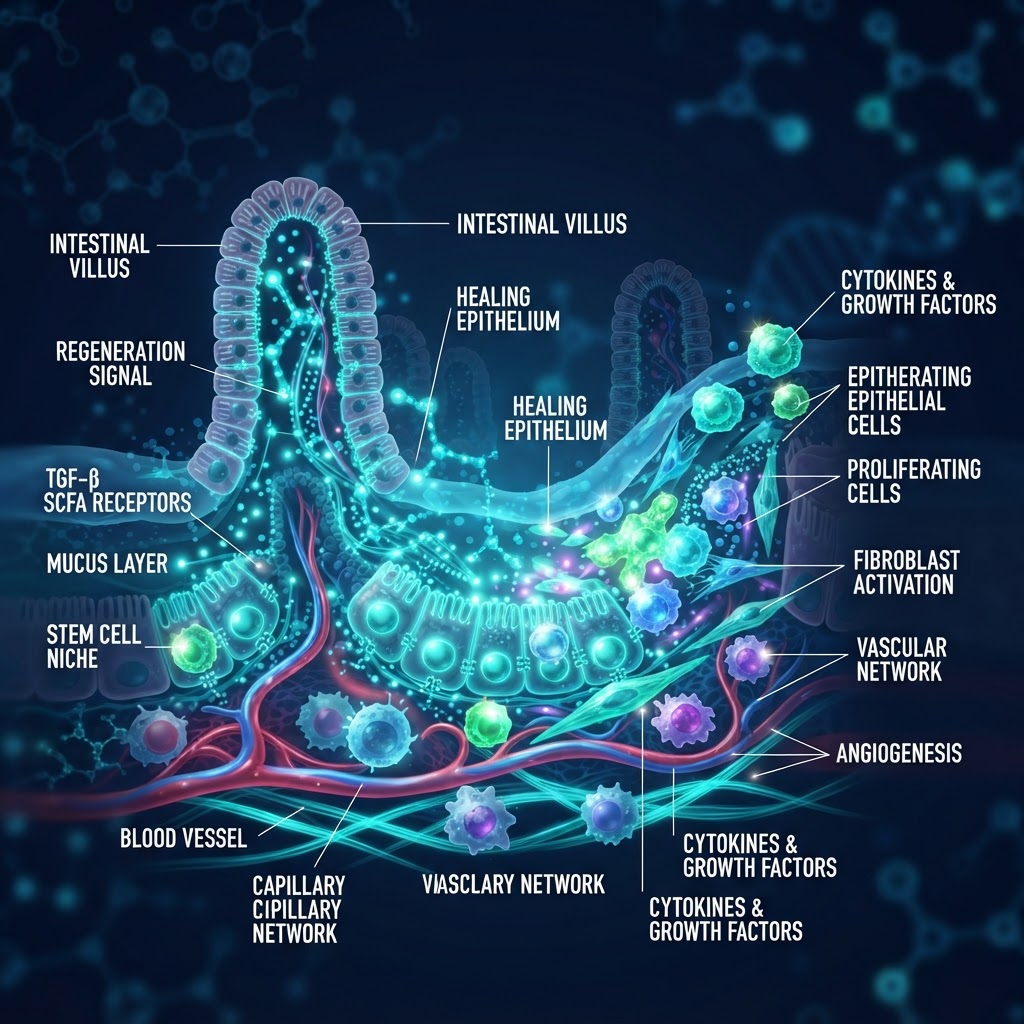
Table of Contents
- 01Could a 15-Amino-Acid Peptide Hold the Key to Gastrointestinal Repair?
- 02What Is BPC-157?
- 03How Does BPC-157 Work? Key Mechanisms in Gut Healing
- 04What the Research Says: BPC-157 & Intestinal Permeability Studies
- 05Research Protocols & Dosing Notes
- 06Conclusion: BPC-157 as a Research Model for Gastrointestinal Biology
Could a 15-Amino-Acid Peptide Hold the Key to Gastrointestinal Repair?
The human gastrointestinal tract is among the most complex biological systems under active scientific investigation — and among the most difficult to therapeutically target. Yet emerging preclinical research suggests that BPC-157 gut healing potential may be one of the most compelling areas of peptide science today. Derived from a naturally occurring protein found in gastric juice, BPC-157 has demonstrated remarkable regenerative properties across dozens of animal model studies, particularly in the context of intestinal barrier integrity, mucosal repair, and inflammatory modulation.
For research scientists and professionals exploring novel gastrointestinal mechanisms, BPC-157 represents a molecularly precise tool worthy of serious inquiry. This post examines the current state of the science — from molecular pathways to in vivo study outcomes.
What Is BPC-157?
BPC-157 (Body Protection Compound-157) is a synthetic pentadecapeptide — a chain of 15 amino acids — derived from a partial sequence of human gastric juice protein BPC. Its full sequence is Gly-Glu-Pro-Pro-Pro-Gly-Lys-Pro-Ala-Asp-Asp-Ala-Gly-Leu-Val, and it carries the molecular formula C62H98N16O22 with a molecular weight of approximately 1,419.5 Da.
Unlike many research peptides that degrade rapidly in physiological environments, BPC-157 demonstrates notable stability in gastric acid, making it particularly interesting for gastrointestinal research applications. It is not found endogenously in isolated form but is instead synthesized for research use based on the bioactive region of its parent protein.
BPC-157 has been studied extensively in rodent models since the 1990s, with research groups — most notably at the University of Zagreb — publishing over 100 papers documenting its effects across wound healing, tendon repair, neurological function, and, critically, gastrointestinal integrity.
How Does BPC-157 Work? Key Mechanisms in Gut Healing
Understanding BPC-157 gut healing requires examining several intersecting molecular pathways. The peptide does not operate through a single receptor; rather, its pleiotropic effects suggest engagement with multiple downstream signaling cascades:
- Nitric Oxide (NO) Pathway Modulation: BPC-157 has been shown to upregulate endogenous nitric oxide synthesis, which plays a critical role in maintaining mucosal blood flow, promoting vasodilation in intestinal microvasculature, and facilitating tissue oxygenation. Dysregulated NO signaling is a hallmark of many inflammatory bowel conditions, and BPC-157's interaction with this pathway is considered central to its gastroprotective profile.
- EGF Receptor Upregulation: Research indicates BPC-157 may stimulate epidermal growth factor receptor (EGFR) expression, which is directly involved in intestinal epithelial cell proliferation and mucosal regeneration — a key component of repairing a compromised intestinal barrier.
- Cytokine & Inflammatory Modulation: Preclinical data suggest BPC-157 can attenuate pro-inflammatory cytokine activity, including TNF-α and IL-6, without acting as a global immunosuppressant. This selective modulation may be relevant to maintaining barrier integrity under chronic inflammatory conditions.
- Angiogenesis Promotion: Studies have demonstrated BPC-157's ability to upregulate VEGF (vascular endothelial growth factor) and promote formation of new blood vessels — critical for delivering nutrients and immune cells to damaged intestinal tissue during the repair process.
- Tight Junction Protein Stabilization: Perhaps most directly relevant to intestinal permeability research, emerging evidence suggests BPC-157 may influence the expression and organization of tight junction proteins such as occludin and claudin-1, which serve as the molecular gatekeepers of paracellular permeability.
These mechanisms collectively position BPC-157 as a multifaceted research tool for studying the biology of intestinal barrier repair rather than a single-target compound.
What the Research Says: BPC-157 & Intestinal Permeability Studies
The bulk of BPC-157 gut healing research has been conducted in rodent models, with results consistently pointing toward significant gastroprotective and mucosal repair effects. Key findings include:
- Inflammatory Bowel Disease Models: In chemically induced colitis models (TNBS and acetic acid-induced), BPC-157 administration significantly reduced macroscopic damage scores, preserved mucosal architecture, and lowered inflammatory markers compared to controls. Researchers observed accelerated healing of ulcerative lesions and reduced neutrophil infiltration.
- NSAID-Induced Gastric Lesions: Multiple studies have examined BPC-157's ability to counteract gastrointestinal damage caused by indomethacin, aspirin, and other NSAIDs — agents well-known to compromise intestinal barrier integrity. BPC-157 consistently reduced lesion formation and preserved mucosal integrity in these models.
- Short Bowel Syndrome Models: Following surgical intestinal resection in rat models, BPC-157 administration was associated with enhanced intestinal adaptation, improved villus height, and increased crypt depth — metrics indicative of accelerated mucosal regeneration and improved absorptive surface area.
- Fistula Healing: One of the more striking lines of research involves esophagocutaneous and colocutaneous fistulas in rodent models, where BPC-157 treatment promoted remarkably rapid closure compared to untreated controls — suggesting strong connective tissue and mucosal repair capability beyond purely luminal effects.
- Peritonitis & Anastomotic Healing: In models of bowel anastomosis and peritonitis, BPC-157 demonstrated improvements in anastomotic strength, reduced adhesion formation, and accelerated healing — findings with significant implications for surgical research.
It is important to note that while this body of preclinical evidence is substantial and methodologically consistent, human clinical trial data for BPC-157 remains limited. All findings referenced here are derived from in vitro or animal model research, and direct extrapolation to human physiology requires formal clinical investigation.
Research Protocols & Dosing Notes
For investigators designing preclinical studies involving BPC-157 and gastrointestinal endpoints, the following parameters reflect dosing strategies used in published literature. These are provided strictly as reference points for research protocol development.
- Typical Rodent Study Doses: Published studies have most commonly used doses ranging from 1 µg/kg to 10 µg/kg body weight in rat models, administered either intraperitoneally (IP) or intragastrically (IG) depending on the study endpoint. Some studies have used doses as high as 100 µg/kg without observed toxicity signals.
- Administration Routes in Research: Both systemic (IP, subcutaneous) and local (intragastric, oral gavage) routes have been employed. The choice of route significantly influences the experimental model — systemic administration is preferred for studying distal intestinal effects, while intragastric administration is more relevant for upper GI and gastric mucosal endpoints.
- Duration: Most acute injury studies use administration windows of 3–14 days post-injury induction. Chronic model studies extend to 4–8 weeks. Baseline measurements and histological endpoints (villus/crypt morphology, tight junction protein expression via Western blot or immunohistochemistry) are standard readouts.
- Stability Considerations: BPC-157 in aqueous solution should be stored at -20°C and protected from repeated freeze-thaw cycles. Lyophilized powder form offers superior long-term stability. Researchers should reconstitute in sterile bacteriostatic water or 0.9% saline immediately prior to use.
- Complementary Research Endpoints: Studies investigating intestinal permeability specifically may benefit from incorporating FITC-dextran permeability assays, TEER (transepithelial electrical resistance) measurements in cell monolayer models, and immunofluorescence staining for tight junction proteins alongside BPC-157 treatment arms.
Conclusion: BPC-157 as a Research Model for Gastrointestinal Biology
The preclinical literature surrounding BPC-157 gut healing is among the most robust and internally consistent bodies of evidence in contemporary peptide research. From nitric oxide pathway modulation to tight junction stabilization and angiogenic promotion, BPC-157 offers researchers a multimechanistic tool for interrogating the complex biology of intestinal barrier function and mucosal repair.
While the translation from rodent model to clinical application remains an open scientific question — one that demands rigorous controlled trials — the mechanistic plausibility and reproducibility of preclinical findings make BPC-157 a compelling subject for continued investigation. For research institutions studying inflammatory bowel disease models, post-surgical intestinal adaptation, or the molecular basis of intestinal permeability, BPC-157 merits a prominent place in the experimental toolkit.
As the field advances, peptide researchers who build methodologically sound, hypothesis-driven investigations around compounds like BPC-157 will be well-positioned to contribute meaningful data to the evolving landscape of gastrointestinal regenerative science.
Disclaimer: All products offered by Biologix Supply are intended for laboratory and research purposes only. They are not approved for human consumption, veterinary use, or clinical application. This content is directed exclusively at qualified research professionals and is provided for educational and scientific informational purposes. Always adhere to applicable institutional, local, and federal regulations governing the use of research compounds.
Biologix Supply Research Team
Expert research team specializing in peptide science and longevity compounds.