PT-141 Mechanism of Action & Research Overview
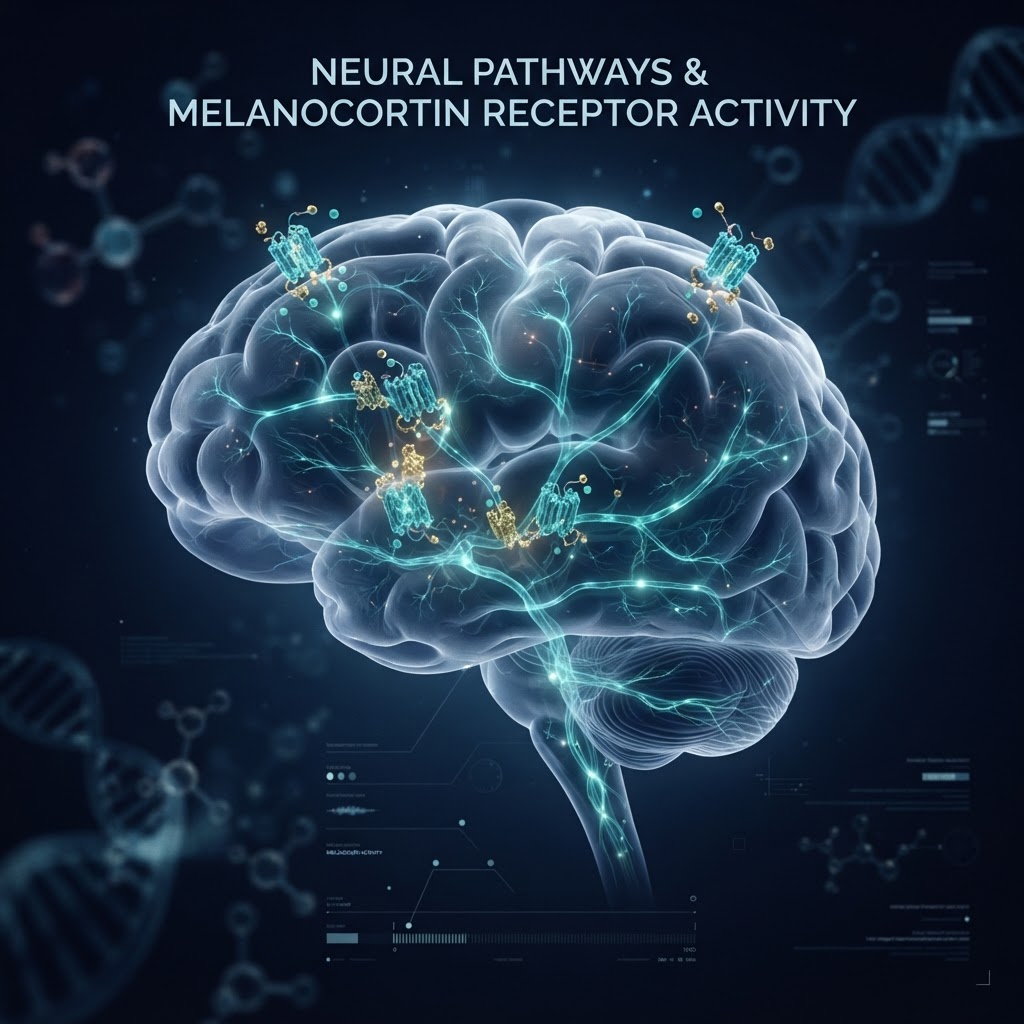
Table of Contents
Could a Single Peptide Unlock the Brain's Role in Arousal Biology?
Unlike most compounds studied in sexual health research — which act peripherally on vascular tissue — PT-141 takes a fundamentally different route. It targets the central nervous system directly, activating melanocortin receptors deep within the hypothalamus to modulate arousal signaling at the neurological level. For research scientists exploring the neuroendocrine regulation of sexual behavior, understanding the PT-141 mechanism of action is essential groundwork. This overview breaks down the biochemistry, receptor pharmacology, and current research landscape surrounding this remarkable cyclic heptapeptide.
What Is PT-141?
PT-141, also known by its clinical designation Bremelanotide, is a synthetic cyclic heptapeptide analog derived from Melanotan II (MT-II). It carries the amino acid sequence Ac-Nle-cyclo[Asp-His-D-Phe-Arg-Trp-Lys]-OH and was originally developed as a sunless tanning agent before researchers identified its potent effects on sexual arousal pathways.
Structurally, PT-141 is distinguished from its predecessor MT-II by the removal of the C-terminal amide group responsible for many of MT-II's undesirable side effects, including spontaneous erections and nausea at research doses. This structural refinement makes PT-141 a more targeted research tool for investigating melanocortin-driven neurological behavior.
In 2019, the FDA approved a PT-141-based drug (Vyleesi™) for hypoactive sexual desire disorder (HSDD) in premenopausal women — marking the first centrally-acting pharmacological agent approved for female sexual dysfunction. This clinical milestone underscores the scientific legitimacy of ongoing PT-141 research and the importance of understanding its underlying mechanism.
How Does PT-141 Work? The Mechanism of Action
The PT-141 mechanism of action centers on its agonist activity at melanocortin receptors, specifically MC3R (Melanocortin-3 Receptor) and MC4R (Melanocortin-4 Receptor), both of which are densely expressed in the hypothalamus and limbic system — brain regions critically involved in sexual behavior, motivation, and reward processing.
Melanocortin Receptor Binding
When PT-141 is administered, it crosses the blood-brain barrier and binds with high affinity to MC3R and MC4R. This binding triggers a G-protein-coupled receptor (GPCR) signaling cascade that increases intracellular cyclic AMP (cAMP) concentrations. The downstream effect is an upregulation of dopaminergic neurotransmission in the medial preoptic area (MPOA) of the hypothalamus — a region recognized as a primary integration center for sexual motivation signals.
Critically, this mechanism is entirely independent of nitric oxide (NO) pathways and vascular signaling, which is how phosphodiesterase-5 (PDE5) inhibitors like sildenafil operate. PT-141 does not rely on sexual stimulation as a prerequisite trigger, nor does it act on penile smooth muscle directly. Instead, it modulates the neurological drive toward sexual behavior — a distinction with significant implications for research into centrally-mediated sexual dysfunction.
Dopaminergic Downstream Effects
MC4R activation in the paraventricular nucleus (PVN) of the hypothalamus stimulates the release of oxytocin and activates oxytocinergic neurons that project to the spinal cord and brainstem. Simultaneously, PT-141 increases dopamine release in the nucleus accumbens — the brain's primary reward center — reinforcing the motivational and appetitive components of sexual behavior in preclinical models.
- Primary Receptor Targets: MC3R and MC4R (hypothalamus, limbic system)
- Signal Transduction: Gαs-coupled cAMP elevation
- Key Brain Regions: Medial preoptic area, paraventricular nucleus, nucleus accumbens
- Neurotransmitter Effects: Increased dopaminergic and oxytocinergic activity
- Mechanism Class: Central (CNS-acting), not peripheral/vascular
What the Research Says
The body of research surrounding the PT-141 mechanism of action has grown substantially since the early 2000s, encompassing preclinical rodent models, non-human primate studies, and multiple phases of human clinical trials.
Preclinical Studies: Seminal work published in the Journal of Urology and Endocrinology demonstrated that intranasal and subcutaneous administration of PT-141 in male rats produced dose-dependent increases in mounting frequency, intromission latency reduction, and ejaculatory behavior — all mediated through central MC4R activation. Female rat models similarly showed increased lordosis behavior and proceptive sexual activity, establishing the bidirectional nature of the peptide's research utility.
Human Clinical Research: Phase II clinical trials published in the Journal of Sexual Medicine evaluated PT-141 in men with erectile dysfunction (ED) who had failed PDE5 inhibitor therapy. Results indicated statistically significant improvements in erectile function scores, with the centrally-acting mechanism providing efficacy in a population where peripheral vascular approaches were insufficient. In women with HSDD, double-blind placebo-controlled trials demonstrated significant increases in satisfying sexual events (SSEs) and reduced distress scores associated with low desire.
Receptor Selectivity Research: Comparative binding assays have refined our understanding of PT-141's selectivity profile. While MT-II demonstrates broader melanocortin receptor activity (MC1R through MC5R), PT-141 research shows preferential activity at MC3R and MC4R, with substantially reduced MC1R activity — correlating with its diminished skin-tanning side effect profile compared to MT-II in research subjects.
Cardiovascular Observations: Research has documented transient, dose-dependent increases in mean arterial blood pressure following PT-141 administration, attributed to MC4R activation in autonomic regulatory centers. This observation has shaped research protocol design and represents an important variable for investigators to account for in experimental models.
Research Protocols & Dosing Notes
For preclinical and in vitro research purposes, understanding standard experimental parameters is critical for reproducible outcomes. The following reflects protocols documented in peer-reviewed literature and is presented strictly for scientific reference.
- Administration Routes Studied: Subcutaneous injection and intranasal delivery have been the predominant routes in published research. Subcutaneous administration demonstrates more consistent bioavailability profiles in rodent models.
- Onset of Activity: In human clinical trials, effects were observed within 45–60 minutes of subcutaneous administration, with a research half-life of approximately 2.7 hours.
- Dose Ranges in Literature: Human clinical studies utilized doses ranging from 0.75 mg to 1.75 mg subcutaneously. Preclinical rodent studies employed weight-adjusted dosing typically between 0.1–1.0 mg/kg depending on the behavioral endpoint being measured.
- Storage Conditions: PT-141 peptide research stocks are typically lyophilized and stored at -20°C, with reconstituted solutions maintained at 4°C and used within standard laboratory timelines to preserve structural integrity.
- Key Research Variables: Investigators should control for baseline hormonal status, stress variables in animal models, and concurrent medications that may interact with dopaminergic or oxytocinergic pathways when designing PT-141 research protocols.
Researchers are encouraged to consult the primary literature — including the work of Pfaus, Shadiack, Van der Ploeg, and colleagues — for detailed methodological frameworks applicable to their specific research objectives.
Conclusion
The PT-141 mechanism of action represents one of the most compelling examples of centrally-directed peptide pharmacology in modern research. By selectively engaging MC3R and MC4R within the hypothalamus and limbic system, PT-141 modulates the neurochemical architecture of sexual motivation through dopaminergic and oxytocinergic pathways — a mechanistic profile entirely distinct from peripheral vascular approaches. Its progression from early melanocortin research through FDA-approved clinical application validates the translational significance of this peptide class and underscores the importance of rigorous preclinical investigation. As melanocortin receptor biology continues to be explored in contexts ranging from sexual dysfunction to metabolic regulation and stress response, PT-141 remains a foundational research tool worthy of continued scientific attention.
Disclaimer: These products are for research purposes only and are not intended for human consumption. All information presented in this article is for educational and scientific reference purposes only. PT-141 and all related peptides sold by Biologix Supply are strictly for use in qualified laboratory and research settings by trained professionals. They are not approved for diagnostic, therapeutic, or human use outside of authorized clinical contexts.
Biologix Supply Research Team
Expert research team specializing in peptide science and longevity compounds.