PT-141 Mechanism of Action & Research Overview
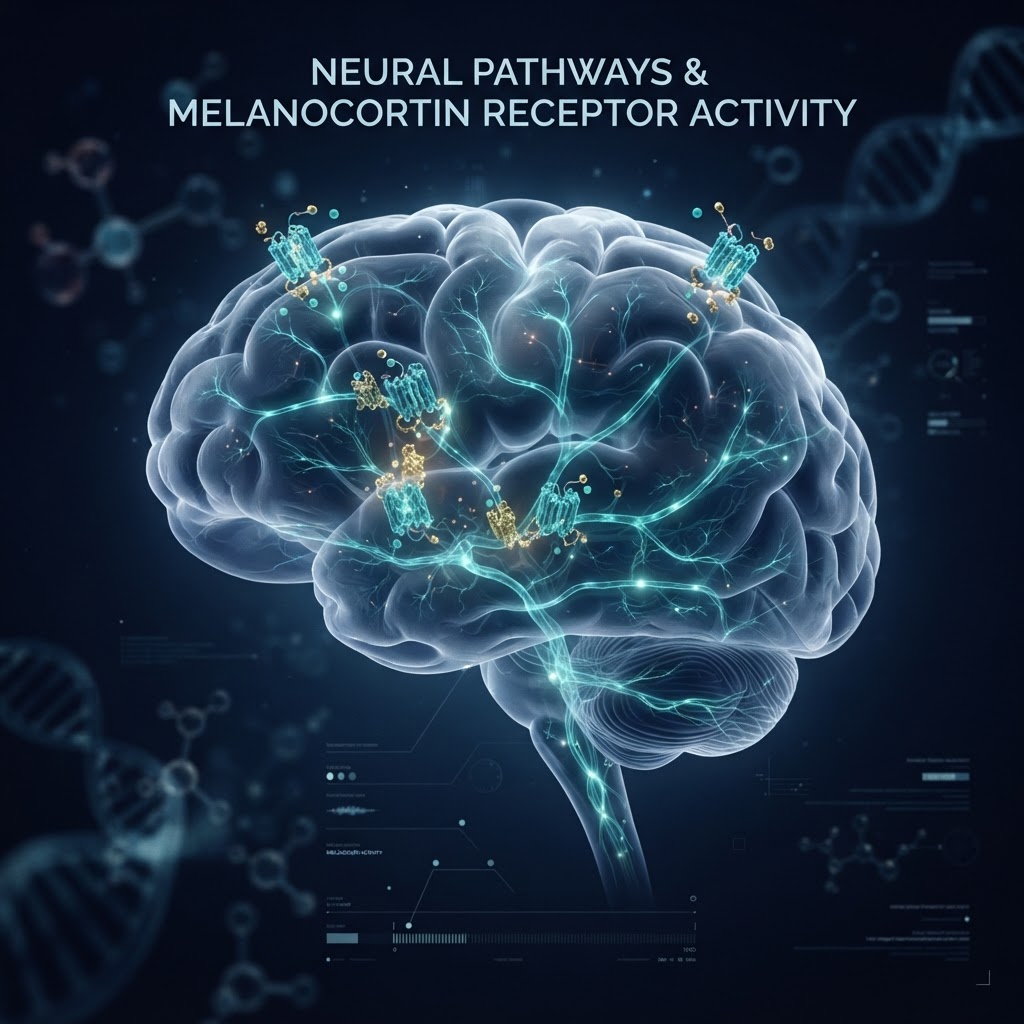
Table of Contents
What if a single peptide could bypass the vascular system entirely and act directly on the central nervous system to influence complex physiological behavior? That is precisely the premise that has made PT-141 (Bremelanotide) one of the most scientifically compelling research peptides under investigation today. Unlike many compounds studied in the peptide space, the PT-141 mechanism of action operates through a distinctly neurochemical route — engaging melanocortin receptors in the brain rather than targeting peripheral tissues or blood flow. For researchers interested in neuropeptide signaling, receptor pharmacology, and CNS-mediated physiological responses, PT-141 represents a uniquely valuable subject of study.
What Is PT-141?
PT-141, also known by its pharmaceutical name Bremelanotide, is a synthetic cyclic heptapeptide derived from Melanotan II (MT-II), which is itself an analogue of alpha-melanocyte-stimulating hormone (α-MSH). The compound carries the molecular formula C50H68N14O10 and a molecular weight of approximately 1,025.2 g/mol.
Originally investigated as a potential tanning agent through its parent compound MT-II, PT-141 emerged as a distinct research focus after early studies revealed significant CNS-mediated effects unrelated to pigmentation. Its cyclic peptide structure contributes to enhanced metabolic stability compared to linear peptides, making it a more tractable research tool for in vivo and in vitro experimental designs. PT-141 has since been explored extensively in the context of central nervous system signaling, hypothalamic function, and melanocortin pathway dynamics.
How Does the PT-141 Mechanism of Action Work?
Understanding the PT-141 mechanism of action requires a foundational grasp of the melanocortin system. The melanocortin system is a network of G-protein-coupled receptors (GPCRs) — MC1R through MC5R — that respond to endogenous ligands derived from proopiomelanocortin (POMC), including α-MSH and ACTH. These receptors are distributed throughout the body and brain, each with distinct expression profiles and functional roles.
PT-141 exerts its primary effects through agonist activity at melanocortin receptor subtypes MC3R and MC4R. Of these, MC4R is of particular scientific interest. MC4R is densely expressed in the paraventricular nucleus (PVN) of the hypothalamus and other limbic brain regions known to regulate autonomic and motivational functions. When PT-141 binds to and activates MC4R, it initiates intracellular signaling cascades — primarily through adenylyl cyclase activation and subsequent cyclic AMP (cAMP) elevation — that modulate downstream neuronal activity.
Key elements of the PT-141 mechanism action include:
- MC4R Agonism: Central activation of MC4R in the hypothalamus drives neurochemical changes associated with dopaminergic and oxytocinergic signaling pathways.
- Hypothalamic Modulation: PT-141 influences neuronal populations in the PVN, medial preoptic area (mPOA), and other hypothalamic nuclei integral to CNS-regulated physiological responses.
- Dopaminergic Crosstalk: Research suggests that MC4R activation intersects with mesolimbic dopamine pathways, potentially influencing motivational and reward circuitry.
- CNS-First Pathway: Unlike PDE5 inhibitors and other vascular-targeting compounds, PT-141 acts centrally — a mechanistic distinction that makes it a particularly valuable model compound for studying brain-body signaling axes.
- MC3R Activity: MC3R agonism may contribute to additional regulatory effects on energy homeostasis and inflammatory modulation, areas of growing research interest.
This CNS-centric PT-141 mechanism of action distinguishes it fundamentally from peripherally acting compounds, offering researchers a unique pharmacological tool for probing hypothalamic receptor biology and melanocortin system dynamics.
What the Research Says
The scientific literature on PT-141 spans preclinical animal models, receptor binding studies, and controlled human trials, providing a rich body of data for researchers to analyze and build upon.
Preclinical Studies: Foundational animal model research demonstrated that intracerebroventricular (ICV) and subcutaneous administration of PT-141 produced measurable behavioral and physiological outcomes mediated through melanocortin receptor engagement. Studies in rodent models helped establish the dose-response relationship at MC3R and MC4R and confirmed the central — rather than peripheral — origin of the compound's primary effects. Notably, MC4R knockout mouse models showed attenuated responses to PT-141, providing strong mechanistic evidence for MC4R as the principal receptor of action.
Receptor Pharmacology: Radioligand binding assays and functional cAMP accumulation studies have quantified PT-141's binding affinity and selectivity profile. The compound demonstrates nanomolar affinity for MC4R and MC3R, with considerably lower affinity for MC1R and MC5R, lending specificity to its CNS-targeted research applications.
Neurochemical Pathway Research: Studies examining downstream signaling have documented PT-141-induced modulation of hypothalamic neuropeptide expression, including oxytocin and dopamine transporter activity. This positions PT-141 as a valuable probe compound for researchers investigating how the melanocortin system interfaces with classical neurotransmitter networks.
Regulatory Milestones: In 2019, the FDA approved Bremelanotide (Vyleesi®) under a specific clinical indication — a milestone that underscores the biological plausibility of the PT-141 mechanism of action and validates the preclinical research pipeline. This approval provides a regulatory reference point for researchers contextualizing their own mechanistic and pharmacological studies.
Ongoing Research Areas: Current investigations continue to explore PT-141's interaction with the broader melanocortin system, its potential influence on energy balance pathways (given MC4R's established role in metabolic regulation), neuroinflammatory modulation, and potential synergistic effects with other receptor-targeting compounds.
Research Protocols & Dosing Notes
For researchers designing experiments involving PT-141, several methodological considerations are relevant to ensuring reproducible, high-quality data:
- Solubility & Reconstitution: PT-141 is typically supplied as a lyophilized powder. Reconstitution in bacteriostatic water or sterile saline (0.9% NaCl) is standard practice. Researchers should confirm solubility and stability under their specific storage and experimental conditions.
- Receptor Subtype Selectivity Controls: Given PT-141's activity at both MC3R and MC4R, experimental designs should incorporate selective antagonists (e.g., SHU9119 or HS024 for MC4R) to isolate receptor-specific contributions to observed outcomes.
- In Vitro Assay Selection: cAMP accumulation assays, β-arrestin recruitment assays, and calcium flux assays are commonly employed to characterize PT-141's functional activity at recombinant melanocortin receptor constructs.
- In Vivo Model Considerations: Rodent models with confirmed MC4R expression profiles are preferred for behavioral and physiological endpoint studies. Researchers should document administration route (subcutaneous, ICV, intraperitoneal) as it significantly influences pharmacokinetic and pharmacodynamic outcomes.
- Stability & Storage: Lyophilized PT-141 is stable at -20°C for extended periods. Reconstituted peptide solutions should be aliquoted, stored at 4°C, and used within recommended timeframes to maintain structural integrity and biological activity.
- Dose-Response Characterization: Establishing full dose-response curves within experimental systems is essential for meaningful mechanistic interpretation. Reported effective concentrations in preclinical literature vary by model and endpoint and should be independently validated in each research context.
Conclusion
The PT-141 mechanism of action — centered on central melanocortin MC4R and MC3R agonism within the hypothalamus and associated limbic structures — positions this peptide as a scientifically distinctive and highly informative research compound. Its CNS-first pharmacology, well-characterized receptor binding profile, and established preclinical and clinical literature make it a compelling subject for researchers working across neuropeptide pharmacology, hypothalamic signaling, and GPCR biology.
As the melanocortin research field continues to expand, PT-141 remains a cornerstone compound for understanding how centrally expressed receptors orchestrate complex physiological processes through neurochemical cascades. For research teams seeking a pharmacologically rigorous tool to interrogate MC4R biology and melanocortin pathway function, PT-141 offers a well-validated and scientifically rich foundation.
At Biologix Supply, we are committed to supporting serious research with high-purity, rigorously quality-controlled peptides. Explore our catalog for research-grade PT-141 and related compounds, supplied with full documentation to support your investigational protocols.
Disclaimer: These products are for research purposes only. Not for human consumption. PT-141 and all peptides available through Biologix Supply are intended exclusively for in vitro and in vivo laboratory research by qualified professionals. They are not approved for diagnostic or therapeutic use in humans or animals. Always adhere to applicable institutional and regulatory guidelines when conducting research.
Biologix Supply Research Team
Expert research team specializing in peptide science and longevity compounds.