AOD-9604 and Fat Metabolism: What Scientific Studies Show
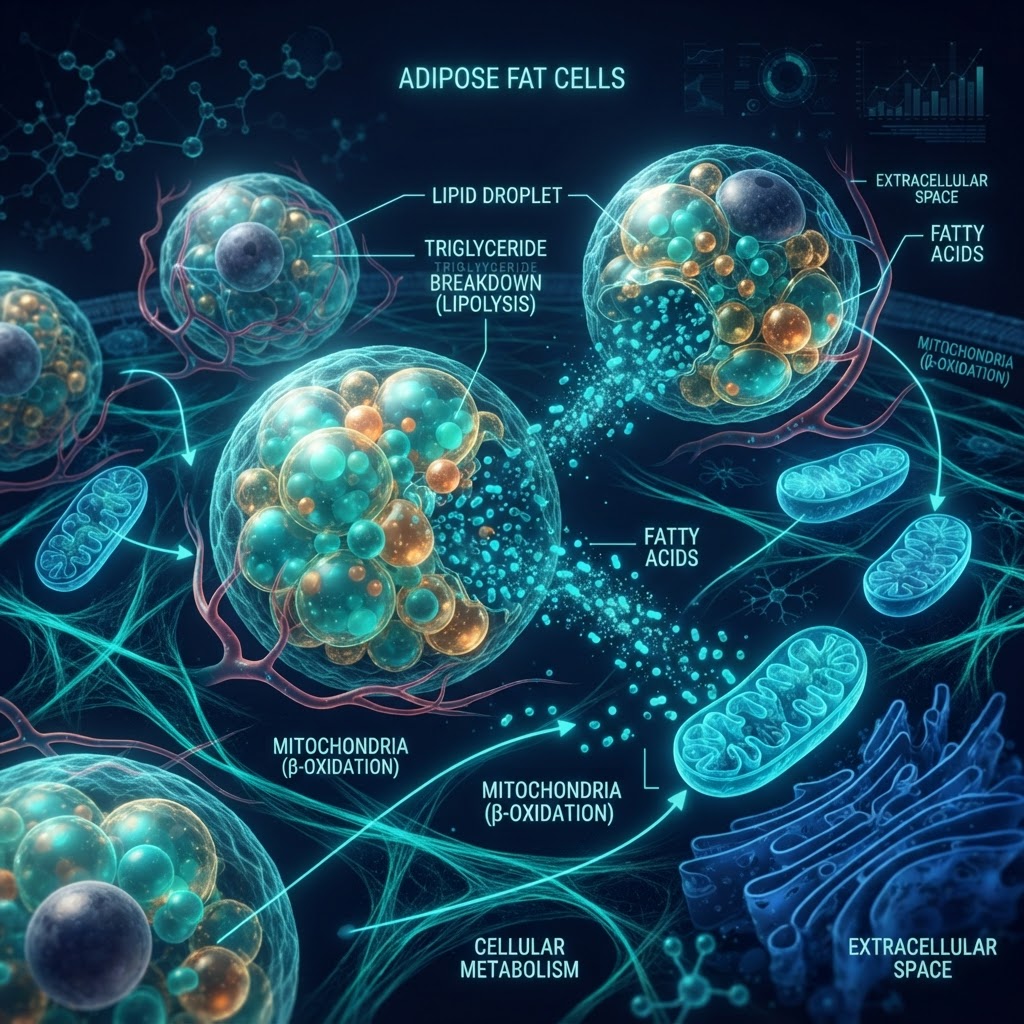
Table of Contents
The Science of Adipose Regulation
Could the future of metabolic research lie in a modified fragment of the human growth hormone? As scientists continue to explore the complexities of adipose tissue, AOD-9604 has emerged as a focal point for understanding how specific peptides interact with fat metabolism pathways. Originally developed as a synthetic analogue of the C-terminal fragment of human growth hormone (hGH), AOD-9604 has been stripped of the growth-promoting effects associated with the full hormone, making it an intriguing subject for controlled laboratory investigations.
What Is AOD-9604?
AOD-9604, or Anti-Obesity Drug 9604, is a modified 15-amino acid peptide derived from the lipolytic domain of human growth hormone (residues 177-191). In its original form, hGH is responsible for a wide array of physiological processes, including bone and tissue growth. However, researchers identified that the C-terminus of the molecule specifically governs lipid metabolism. By isolating and modifying this sequence, scientists created AOD-9604 to study its potential impact on fat cells without the typical systemic effects of HGH, such as insulin sensitivity changes or glucose fluctuations.
How Does It Work?
The mechanism behind AOD-9604 and fat metabolism is rooted in the stimulation of lipolysis and the inhibition of lipogenesis. Studies suggest that AOD-9604 mimics the metabolic regulatory properties of the human growth hormone, effectively signaling for the release of fatty acids from adipocytes (fat cells). By acting on the beta-3 adrenergic receptors, it helps mobilize stored fats, potentially increasing the availability of energy substrates in the bloodstream. Unlike traditional growth hormone, it does not exert significant influence on the IGF-1 axis, providing a more refined look at lipid-specific metabolic modulation.
What the Research Says
Laboratory data and early clinical trials have provided a foundation for the study of AOD-9604. One key observation in animal models is the peptide's capacity to reduce fat accumulation in specific adipose depots, particularly those that are resistant to traditional metabolic shifts. Research published in journals such as Endocrinology and The Journal of Clinical Endocrinology & Metabolism has noted that the peptide acts directly on fat cells, effectively shifting the balance toward fatty acid oxidation. While human trials have yielded mixed results regarding weight loss efficacy, they remain highly valuable for researchers examining the peptide's safety profile and its ability to modulate adipocyte homeostasis under varying nutritional conditions.
Research Protocols & Dosing Notes
For researchers and scientists, standardizing the study of AOD-9604 requires strict adherence to laboratory protocols. Common research dosages used in preclinical trials generally range from 250 mcg to 500 mcg per administration, typically delivered via subcutaneous injection to allow for consistent absorption. Given the peptide's relatively short half-life in a biological system, multi-day cycles are often utilized to observe sustained metabolic interactions. Researchers should prioritize purity and verified laboratory-grade peptide standards to ensure that study outcomes are reflective of the peptide itself rather than potential contaminants or degradation products.
Conclusion
AOD-9604 represents a fascinating frontier in biochemical research, specifically regarding the regulation of adipose tissue and systemic energy expenditure. While the scientific community continues to map out the exact pathways involved in AOD-9604 fat metabolism, the existing data points toward a highly specific, targeted approach to lipid regulation. As analytical technologies improve, further studies will likely elucidate more precise therapeutic windows and long-term metabolic markers associated with this peptide. Biologix Supply remains committed to providing the highest quality research materials to support these critical scientific endeavors.
Disclaimer: These products are for research purposes only. Not for human consumption.
Biologix Supply Research Team
Expert research team specializing in peptide science and longevity compounds.