Understanding the PT-141 Mechanism Action in Peptide Research
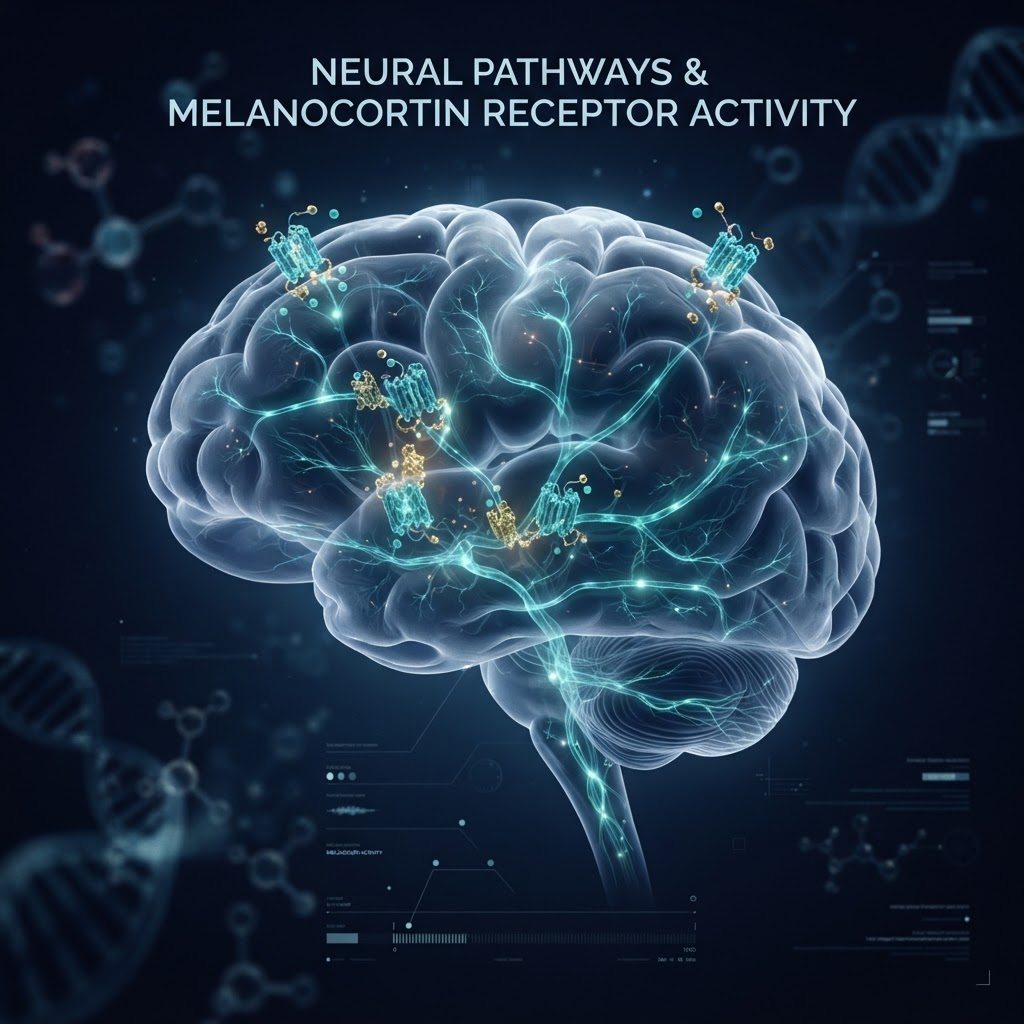
Table of Contents
The Science Behind PT-141
How do targeted synthetic peptides influence systemic physiological responses without relying on vascular pathways? For research professionals, the quest for understanding non-traditional signaling molecules has led to significant interest in the PT-141 mechanism action. As a cyclic heptapeptide lactam, PT-141, also known as Bremelanotide, represents a unique class of compounds that bypass the peripheral circulatory system to act directly upon the central nervous system.
What Is PT-141?
PT-141 is a synthetic analog of the naturally occurring peptide hormone alpha-melanocyte-stimulating hormone (α-MSH). Derived from the parent compound Melanotan II, PT-141 was developed to isolate specific therapeutic potential while minimizing certain unwanted physiological effects observed in previous iterations. Unlike traditional PDE5 inhibitors, which rely on localized vasodilation, PT-141 is a non-selective melanocortin receptor agonist that initiates its effects within the brain.
How Does It Work?
The PT-141 mechanism action is primarily categorized by its high-affinity binding to melanocortin receptors (MCRs), specifically subtypes MC3R and MC4R. Located within the hypothalamic region of the brain, these receptors are integral in regulating energy homeostasis, metabolism, and various neurochemical pathways. By acting as a potent agonist, PT-141 triggers a signaling cascade that influences downstream neurotransmitter release. Scientific literature suggests that the binding of this peptide to receptors in the paraventricular nucleus leads to the activation of oxytocinergic neurons. This activation is believed to be the catalyst for its systemic effects, demonstrating that the primary site of action is strictly central rather than peripheral.
What the Research Says
Recent studies in mammalian models have provided insight into the efficacy of PT-141. Researchers have documented that when these central receptors are stimulated, there is a marked change in behavioral and physiological markers. Clinical research continues to investigate how the selective activation of MC4R can modulate various aspects of neural signaling. Furthermore, current peer-reviewed literature highlights that the PT-141 mechanism action does not directly interfere with nitric oxide pathways, providing a distinct advantage in the study of neuro-endocrine interactions. This differentiation is critical for researchers comparing the peptide against traditional pharmacological interventions that rely on cardiovascular system modification.
Research Protocols & Dosing Notes
When incorporating PT-141 into research models, establishing strict protocols is paramount. Laboratory investigations typically utilize lyophilized powder reconstituted with bacteriostatic water. Dosing in animal studies is generally calculated based on body weight, with initial cohorts often receiving lower titrations to observe dose-response curves. It is essential to ensure that all reagents are of high purity, as trace impurities can significantly alter the binding affinity of the peptide to the MC4 receptors. Researchers should maintain detailed records of administration times and environmental variables to ensure the reproducibility of data regarding the PT-141 mechanism action.
Conclusion
The study of PT-141 continues to be a focal point in neuroscience and endocrinology. By focusing on the PT-141 mechanism action, scientists can better understand the role of melanocortin receptors in complex biological signaling. As research progresses, we expect to see further elucidation of how these peptide agonists can be utilized to map neuro-pathways that govern physiological homeostasis. Biologix Supply remains committed to providing the highest quality research materials for these critical investigative efforts.
Disclaimer: These products are for research purposes only. Not for human consumption.
Biologix Supply Research Team
Expert research team specializing in peptide science and longevity compounds.