GHK-Cu Skin Regeneration and Wound Healing: Research Overview
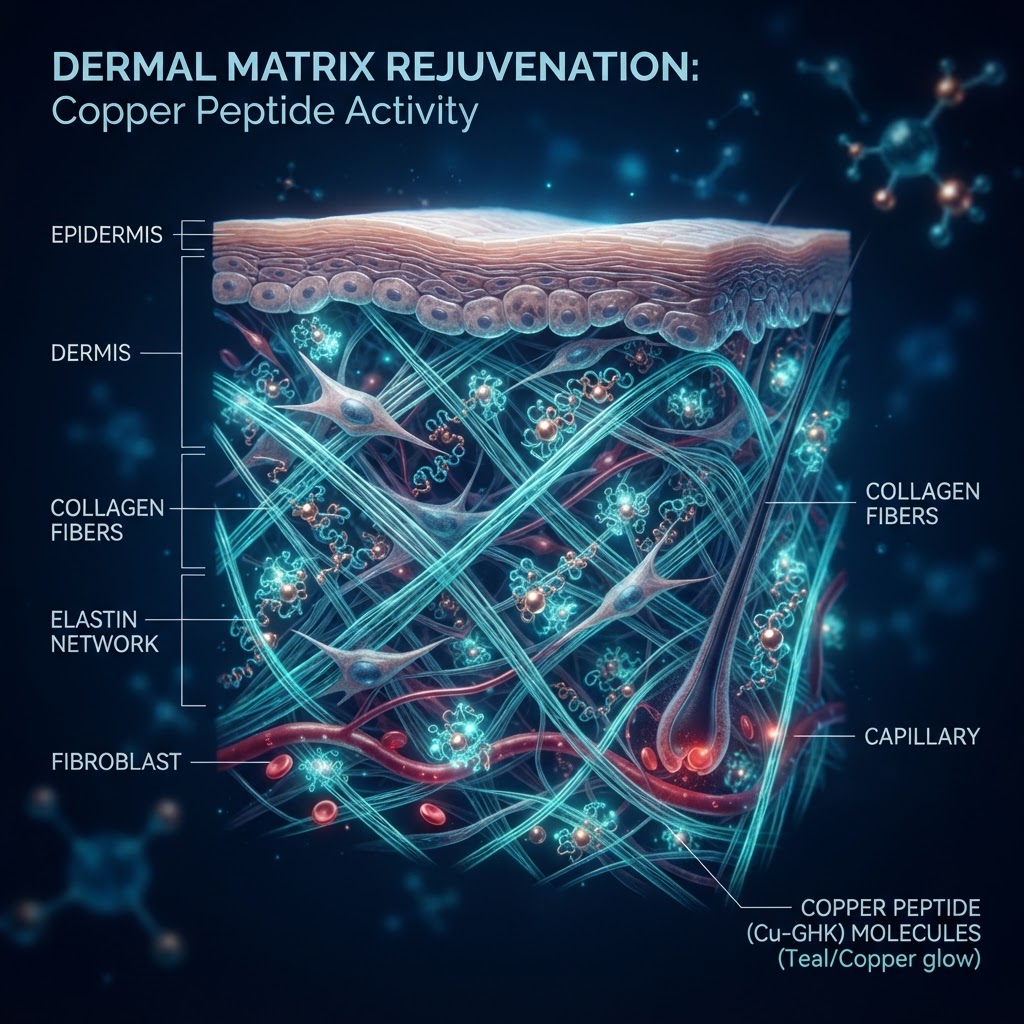
Table of Contents
The Science of Cellular Repair
Did you know that GHK-Cu, a naturally occurring copper tripeptide, declines by over 60% in the human body between the ages of 20 and 60? This significant reduction has made the study of GHK-Cu skin regeneration a focal point for researchers aiming to unlock advanced therapeutic protocols for tissue repair and dermal rejuvenation.
What Is GHK-Cu?
GHK-Cu (glycyl-L-histidyl-L-lysine:copper) is a small, naturally occurring tripeptide-copper complex originally isolated from human plasma. It exhibits a high affinity for copper ions, which play a fundamental role in various enzymatic processes. In laboratory settings, GHK-Cu has demonstrated an ability to act as a potent signaling molecule, modulating gene expression and influencing cellular activity in fibroblasts and keratinocytes.
How Does It Work?
The mechanism of GHK-Cu skin regeneration is rooted in its unique ability to modulate extracellular matrix (ECM) components. Research indicates that the peptide acts through several specific biological pathways:
- Stimulation of Collagen Synthesis: GHK-Cu promotes the proliferation of dermal fibroblasts and increases the synthesis of collagen, elastin, and glycosaminoglycans.
- Metalloproteinase Modulation: It regulates the balance between the synthesis and breakdown of ECM proteins by modulating matrix metalloproteinases (MMPs) and their inhibitors (TIMPs).
- Angiogenesis: By stimulating vascular endothelial growth factor (VEGF), GHK-Cu supports the formation of new blood vessels, a critical step in effective wound healing.
- Anti-inflammatory Effects: The peptide has been observed to reduce the expression of pro-inflammatory cytokines, creating an environment more conducive to tissue repair.
What the Research Says
Scientific literature consistently highlights the efficacy of GHK-Cu in promoting wound healing. Studies involving animal models and in vitro human skin cultures have shown that GHK-Cu accelerates the re-epithelialization process and improves the structural integrity of the dermal matrix. Unlike traditional growth factors that may trigger uncontrolled cell division, GHK-Cu acts as a regulatory peptide, promoting a return to homeostasis in compromised tissues.
Research Protocols & Dosing Notes
In clinical research, GHK-Cu is often applied in topical formulations or utilized in systemic delivery studies. Concentrations in successful trials typically range between 0.1% and 2.0% for topical applications to promote skin health. For systemic research protocols, researchers must adhere to strict guidelines regarding dosage and delivery methods, ensuring that experimental variables remain controlled. Investigators should note that the stability of the peptide in solution is highly dependent on pH levels and the presence of other stabilizing agents.
Conclusion
The potential for GHK-Cu skin regeneration to revolutionize the field of dermatology and wound care is substantial. By leveraging its role as a master signaling molecule, researchers continue to uncover new applications for tissue repair and cellular longevity. As we move forward, standardizing research protocols will be essential to translate these promising laboratory findings into consistent clinical applications.
Disclaimer: These products are for research purposes only. Not for human consumption.
Biologix Supply Research Team
Expert research team specializing in peptide science and longevity compounds.