TB-500 and Tendon Repair: What the Current Research Says
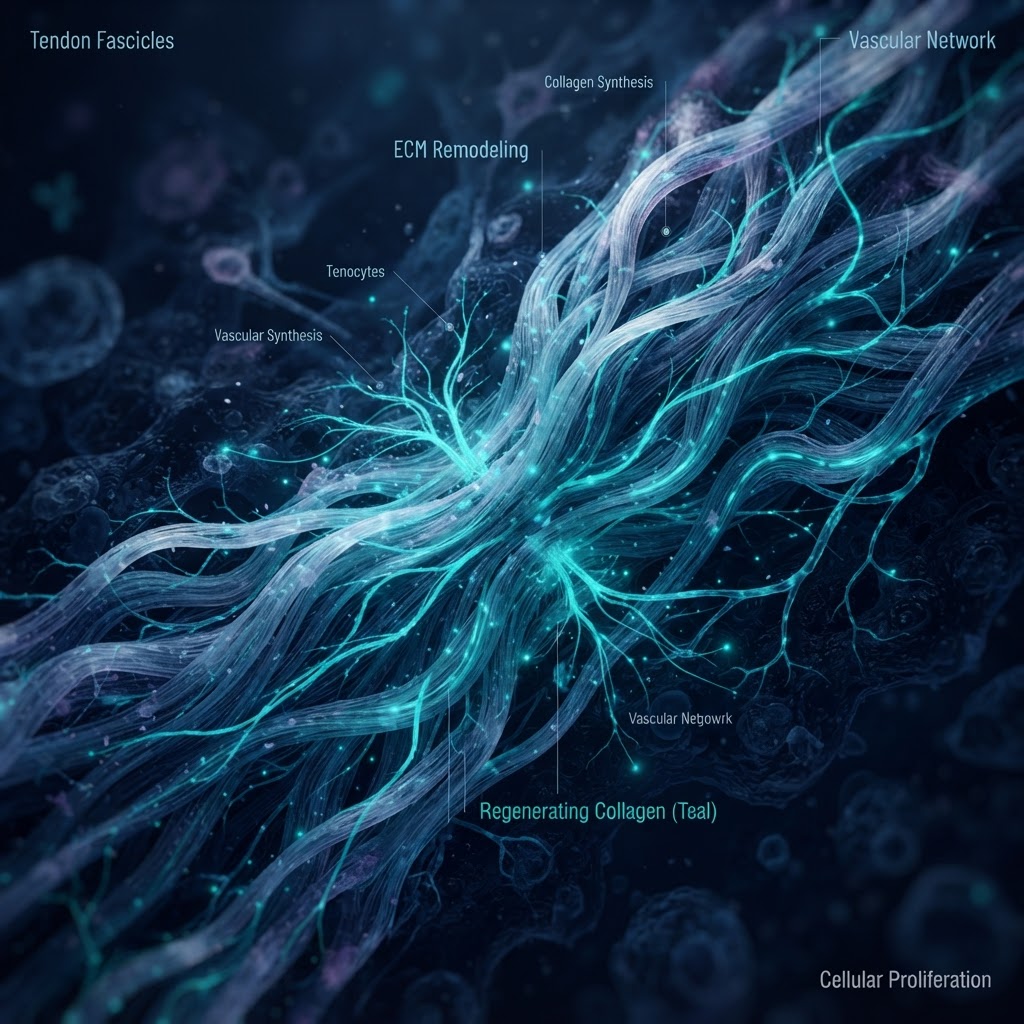
Table of Contents
The Challenge of Tendon Healing
Did you know that musculoskeletal injuries account for a significant portion of recovery time in both high-performance athletes and clinical settings? Tendon tissues, characterized by low vascularity and slow metabolic turnover, pose unique challenges for regenerative therapies. In the quest for effective recovery modalities, TB-500 tendon repair potential has moved to the forefront of recent investigative research.
What Is TB-500?
TB-500 is the synthetic fraction of the naturally occurring protein Thymosin Beta-4 (Tβ4). Composed of 43 amino acids, this peptide is highly conserved throughout the animal kingdom. While Tβ4 is present in almost all human cells, researchers utilize the synthetic version, TB-500, to isolate its specific properties, particularly its ability to circulate throughout the body via systemic administration, bypassing some of the limitations of endogenous protein expression.
How Does It Work?
The primary mechanism behind TB-500 and its efficacy is its influence on actin sequestration. Actin is a vital protein involved in the structural architecture of cells and their motility. By regulating actin polymerization, TB-500 enables cellular migration—the essential first step in tissue repair. Beyond cellular motility, research suggests that TB-500 promotes:
- Angiogenesis: The growth of new blood vessels, which is critical for providing nutrients to poorly vascularized tendon tissue.
- Anti-inflammatory signaling: Down-regulating pro-inflammatory cytokines that can impede the healing of damaged collagen fibers.
- Extracellular matrix remodeling: Assisting in the organization of collagen fibers during the recovery phase.
What the Research Says
The relationship between TB-500 tendon repair capabilities and clinical outcomes has been the subject of multiple preclinical studies. Research in rodent models has demonstrated that the administration of Thymosin Beta-4 fractions significantly improves the quality of healing in torn tendons and ligaments. A key finding in these studies is the reduction in scar tissue formation. Instead of random, disorganized collagen deposition, the application of TB-500 appears to encourage the development of more parallel, functional collagen fibers. These studies indicate that by accelerating cellular recruitment to the site of injury, TB-500 may decrease the duration of the inflammatory phase, allowing the tissue to progress more efficiently toward the remodeling stage of healing.
Research Protocols & Dosing Notes
In laboratory and research settings, dosing protocols for TB-500 vary depending on the objectives of the study. Most research cohorts utilize subcutaneous injection protocols due to the peptide's systemic nature. Standard investigative dosages often range from 2mg to 5mg, administered one to two times per week. Scientists should note that because TB-500 is a peptide, its half-life requires consistent administration to maintain stable systemic levels. Researchers must document the site of application and monitor for local tissue responses as part of standard data collection.
Conclusion
The investigation into TB-500 and tendon repair continues to offer promising insights into the future of regenerative science. While the results observed in animal models are encouraging, further research is required to fully characterize the optimal delivery methods and long-term effects of this peptide. As we continue to refine our understanding of its actin-regulating properties, TB-500 remains a focal point for investigators studying the intersection of peptide therapy and musculoskeletal repair.
Disclaimer: These products are for research purposes only. Not for human consumption.
Biologix Supply Research Team
Expert research team specializing in peptide science and longevity compounds.