Cellular Aging and Peptide Research: NAD+ Pathways, GHK-Cu and Epithalon

The Molecular Landscape of Anti-Aging Peptides Research
In the pursuit of understanding cellular senescence and longevity, the scientific community has increasingly turned its focus toward the modulation of fundamental metabolic and structural pathways. Anti-aging peptides research has emerged as a cornerstone of modern molecular biology, providing investigators with tools to probe the mechanisms of cellular maintenance, mitochondrial integrity, and genomic stability. This article examines three key components currently under rigorous laboratory investigation: the NAD+ precursor landscape, GHK-Cu, and the tetrapeptide Epithalon.
NAD+ Pathways and Mitochondrial Bioenergetics
Nicotinamide adenine dinucleotide (NAD+) is a quintessential coenzyme found in all living cells, serving as a critical substrate for enzymes involved in DNA repair and metabolic regulation. In aged tissue samples, NAD+ levels have been observed to decline, prompting researchers to utilize various peptide and small-molecule precursors to study the restoration of NAD+ pools. The objective of such studies is to determine how elevated NAD+ availability influences SIRT1 activity and subsequent mitochondrial biogenesis. In vitro models focus on the rate of mitochondrial respiration and the reduction of reactive oxygen species (ROS) when these pathways are up-regulated.
GHK-Cu: Investigating Structural Integrity and Gene Modulation
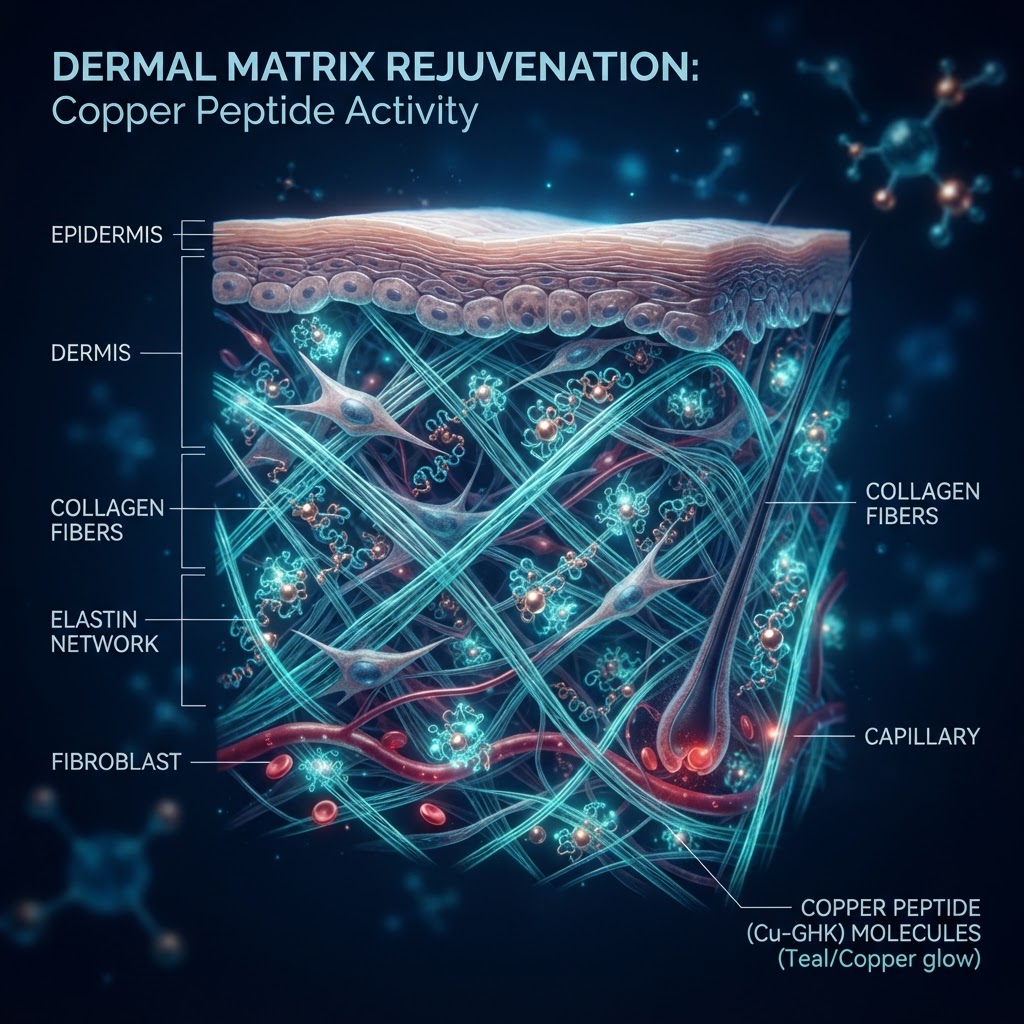
The tripeptide glycyl-L-histidyl-L-lysine, when complexed with copper (GHK-Cu), is a well-characterized subject in regenerative biological research. Originally isolated from human plasma, GHK-Cu has demonstrated significant potential in modulating gene expression related to extracellular matrix turnover. Laboratory assays frequently examine its role in:
- Collagen synthesis acceleration in fibroblast cell cultures.
- The downregulation of pro-inflammatory cytokines such as TGF-beta.
- The stimulation of cellular migration and wound-healing signaling pathways.
Epithalon: Telomere Regulation and Proliferative Capacity
Epithalon (Ala-Glu-Asp-Leu) is a synthetic tetrapeptide modeled after the endogenous extract epithalamin. Within the scope of preclinical anti-aging peptides research, Epithalon is often evaluated for its potential to stimulate telomerase activity. The shortening of telomeres—the protective caps at the ends of chromosomes—is a hallmark of cellular aging. Research protocols utilizing immortalized cell lines seek to analyze whether Epithalon treatment can extend the replicative lifespan of cells and influence the methylation patterns of DNA, thereby maintaining genomic integrity over successive mitotic divisions.
Technical Considerations: Concentration and Lab Handling
For researchers standardizing their protocols, precision in peptide preparation is paramount. When dealing with research-grade peptides, investigators must ensure accurate molar calculations based on the peptide's molecular weight and the desired concentration in the buffer solution. Common procedures include:
- Solubilization: Utilizing high-purity, nuclease-free water or appropriate physiological buffers (e.g., PBS) while maintaining strict pH control to ensure peptide stability.
- Storage: Lyophilized peptides should be maintained at -80°C under inert gas to prevent oxidation, particularly for compounds sensitive to atmospheric degradation.
- Quantification: Employing spectrophotometric methods or HPLC to confirm concentration and purity levels before initiating assays.
Disclaimer: All products listed by Biologix Supply are intended strictly for laboratory research and in vitro use only. These compounds are not for human or veterinary use, consumption, or therapeutic application. Handling must be performed by qualified professionals in a controlled laboratory environment.
Biologix Supply Research Team