GHK-Cu Skin Regeneration: Scientific Overview and Mechanisms
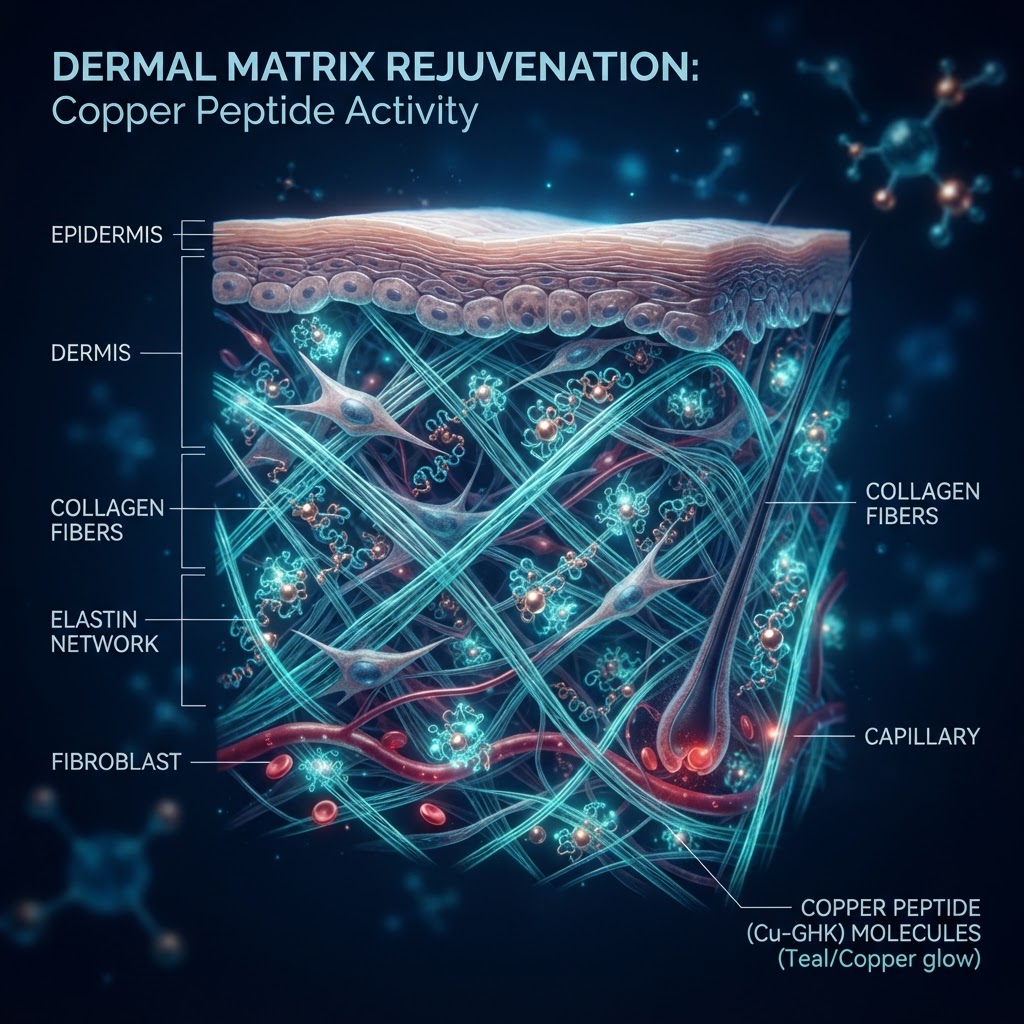
Table of Contents
The Science of Tissue Repair: An Introduction
How does the human body maintain the integrity of its largest organ despite constant environmental stressors and age-related degradation? Recent interest in GHK-Cu skin regeneration suggests that specific peptide-copper complexes may serve as critical signaling molecules for cellular maintenance. As researchers continue to investigate peptide therapeutics, GHK-Cu stands out for its high affinity for copper and its multifaceted impact on cellular pathways.
What Is GHK-Cu?
GHK-Cu is a naturally occurring tripeptide complex consisting of the amino acid sequence glycyl-L-histidyl-L-lysine (GHK) bound to a copper ion. First identified in human plasma, this complex has been studied extensively for its role in skin biology and tissue repair. Unlike many other synthetic peptides, GHK-Cu is endogenous, existing in low concentrations in the human body, though its levels drop significantly as biological age advances. Because of its unique structure, it acts as a delivery vehicle for copper, a micronutrient essential for various enzymatic processes throughout the human body.
How Does It Work?
The mechanism behind GHK-Cu skin regeneration is complex and involves several biological pathways. Primarily, GHK-Cu is known to act as a potent epigenetic modulator. It influences gene expression in dermal fibroblasts, effectively switching on genes involved in the production of collagen, elastin, and glycosaminoglycans. By stimulating these components of the extracellular matrix, GHK-Cu supports the structural foundation of the skin. Furthermore, its copper ion component is a necessary cofactor for lysyl oxidase, an enzyme that cross-links collagen and elastin, which is essential for wound healing and tissue tensile strength. Additionally, GHK-Cu exhibits anti-inflammatory and antioxidant properties, which help neutralize reactive oxygen species (ROS) that contribute to cellular damage.
What the Research Says
Clinical and laboratory research into GHK-Cu has provided significant insights into its potential for dermatological repair. Studies have demonstrated that the application or presence of GHK-Cu encourages the migration of keratinocytes and fibroblasts to the site of an injury, effectively accelerating the wound healing cycle. Furthermore, research indicates that GHK-Cu can influence the expression of matrix metalloproteinases (MMPs), which are responsible for the remodeling of damaged tissue. In comparative studies, researchers have noted that GHK-Cu may outperform other growth factors in promoting the growth of blood vessels (angiogenesis) within healing tissue, which is a vital step in restoring compromised skin barriers.
Research Protocols & Dosing Notes
In laboratory settings, researchers must adhere to strict protocols to maintain the stability and efficacy of GHK-Cu. Stability is a major factor, as the copper ion can be easily displaced if the environment is not properly pH-balanced. Most experimental protocols utilize GHK-Cu in topical preparations or buffered aqueous solutions. Dosage ranges in rodent studies have typically focused on site-specific concentrations to assess local tissue repair, with researchers monitoring for parameters such as epithelial closure time and collagen density indices. It is imperative that investigators use high-purity, lyophilized GHK-Cu to ensure that experimental results remain consistent and free from contaminants.
Conclusion
The potential for GHK-Cu skin regeneration remains a focal point in regenerative medicine research. By modulating gene expression and facilitating essential enzymatic activity, this tripeptide serves as a powerful tool for exploring the limits of tissue repair and cellular longevity. As we look toward future applications, continued investigation into the specific pathways triggered by GHK-Cu will undoubtedly reveal more about how we can support skin health and integrity at a molecular level. Biologix Supply remains committed to providing the highest quality research materials for these vital scientific inquiries.
Disclaimer: These products are for research purposes only. Not for human consumption.
Biologix Supply Research Team
Expert research team specializing in peptide science and longevity compounds.